
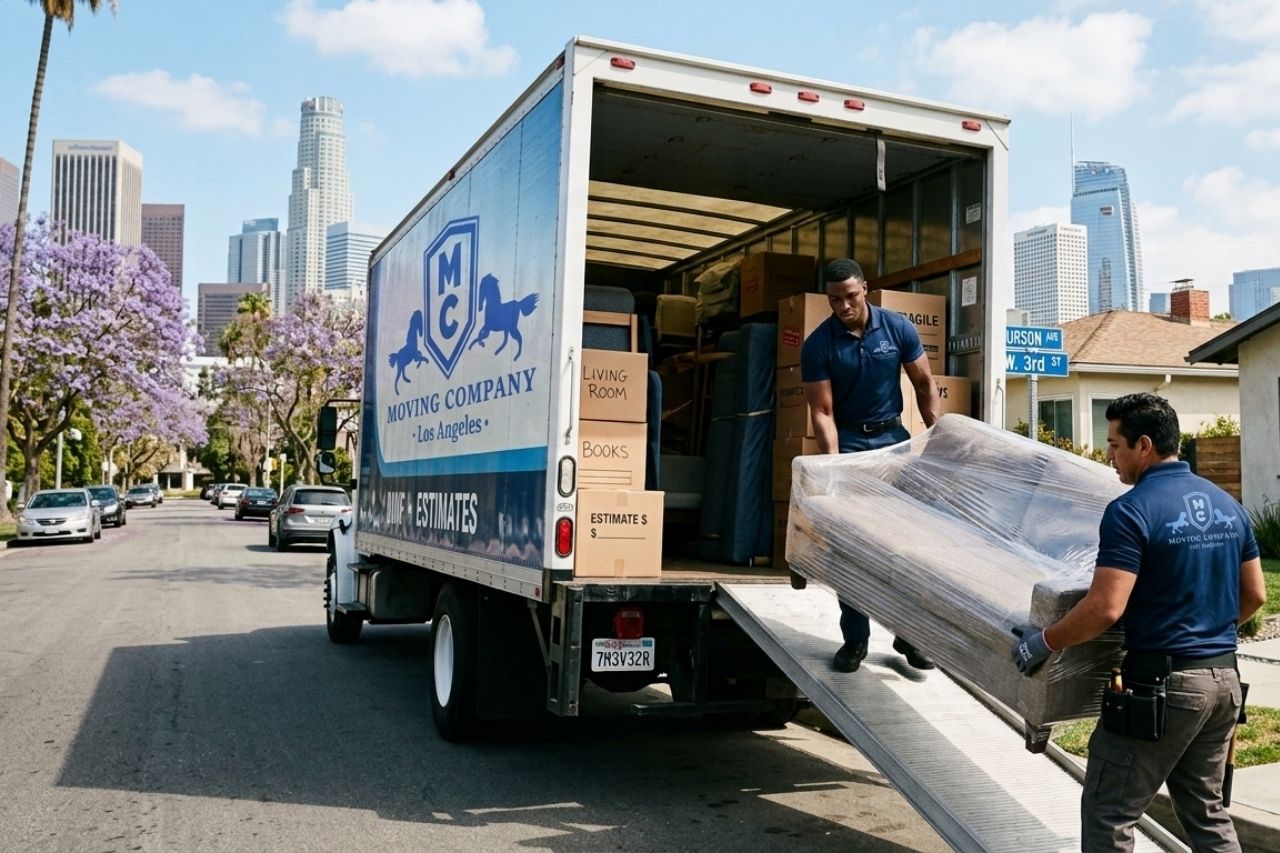
How Much Do Movers Cost in Los Angeles in 2026?
How Much Do Movers Cost in Los Angeles in 2026? If you’re planning a move in LA this year, “how much will this actually cost me?” is probably the first question on your mind — and it’s a fair one. Between traffic, parking restrictions, walk-up apartments, and a moving market with hundreds of companies to choose from, Los Angeles is one of the more unpredictable cities in the country when it comes to moving costs.
How Much Do Movers Cost in Los Angeles in 2026?
At Moving Company Los Angeles, we get asked about pricing every single day. Rather than throw a random number at you, this guide breaks down exactly what drives the cost of your move up or down — so you can budget realistically and know what to ask for when you request a quote.
What Determines the Cost of Your Move
No two moves cost the same, because no two moves involve the same variables. Here’s what movers actually factor into a quote:
Size of your home. A studio or one-bedroom apartment takes a fraction of the time (and crew size) that a 3-4 bedroom house does. More rooms means more furniture, more boxes, and more labor hours.
Distance. Local moves within LA County are typically billed hourly. Long-distance or interstate moves are usually priced by weight and mileage instead, since the crew and truck are committed to your job for a full day or more.
Access and logistics. This is the LA-specific wildcard. Narrow streets, no dedicated parking, walk-up units without elevators, and HOA or building move-in restrictions can all add real time (and cost) to a job. A move in a high-rise in Downtown LA or Koreatown often takes longer than the identical move in a house with a driveway in the Valley.
Time of year and day of week. Summer (roughly May through September), weekends, and the end of the month are the busiest — and priciest — windows for movers in LA, since that’s when most leases turn over.
Extra services. Full packing/unpacking, furniture disassembly and reassembly, crating for fragile or oversized items (pianos, artwork, mirrors), and short- or long-term storage are usually quoted separately from the base move.
Insurance and valuation coverage. Basic coverage is typically included, but additional protection for high-value items comes at an added cost.
Local Moves vs. Long-Distance Moves
Local moves (generally under 100 miles, and often within LA County) are almost always billed hourly, based on the number of movers and the time the job takes from arrival to the last box unloaded. A studio move might wrap up in a few hours with a two-person crew; a full house can take most of a day with a larger team.
Long-distance and interstate moves work differently. Instead of an hourly rate, companies calculate cost based on the total weight (or cubic footage) of your belongings and the distance being traveled. This is also where DOT licensing matters — for any interstate move, your mover legally needs a valid USDOT number. Always confirm this before booking; it protects you if anything goes wrong along the way.
What Actually Shows Up on a Quote
Rather than quote you a fixed number here (every home and every street in LA is different), the most useful thing we can do is tell you what a legitimate quote should include:
- A clear hourly rate or weight-based rate, stated up front
- Number of movers and estimated hours/crew size
- Truck and fuel fees, if applicable
- Any minimum hour requirement
- Cost of add-ons you request (packing materials, furniture wrapping, disassembly)
- Valuation/insurance coverage terms
- Any potential extra fees for stairs, long carries, or parking permits
If a company won’t walk you through these line items, that’s a red flag — not a bargain.
Why Los Angeles Moves Can Cost More Than You Expect
A few things make LA a uniquely tricky market to budget for:
- Traffic. If your crew spends two hours driving across town between pickup and drop-off, that’s billable time on an hourly job.
- Parking. Many neighborhoods require a temporary “No Parking” permit for the moving truck. Sorting this out ahead of time avoids delays (and fees) on move day.
- Building access. Elevators that need to be reserved, walk-up units, and long lobby-to-curb distances all add labor time.
- Neighborhood. Rates in areas like Beverly Hills or Santa Monica tend to run higher than in the San Fernando Valley or South LA, largely due to demand and access difficulty.
How to Keep Your Moving Costs Down
You don’t have full control over LA’s roads or your building’s elevator schedule, but you do have control over a few things that meaningfully affect your final bill:
- Declutter before you move. Fewer items means less time, fewer boxes, and often a smaller crew.
- Book mid-week or mid-month. Avoiding the end-of-month and weekend rush can mean better availability and pricing.
- Source your own packing materials where you can, and only pay for professional packing on the items that truly need it.
- Get multiple quotes and compare what’s actually included, not just the bottom-line number.
- Ask about flat-rate options. Some companies offer an all-inclusive flat fee locked in before move day, which can protect you from surprise add-ons.
Get an Accurate Quote from Moving Company Los Angeles
Every move is different, and the only way to get a number you can actually count on is a real assessment of your home, your timeline, and your destination. At Moving Company Los Angeles, we provide free, no-obligation quotes based on your specific move — no guesswork, no hidden fees, and no surprises on move day.
Ready to see what your move will actually cost? Contact us today for a free, personalized quote.